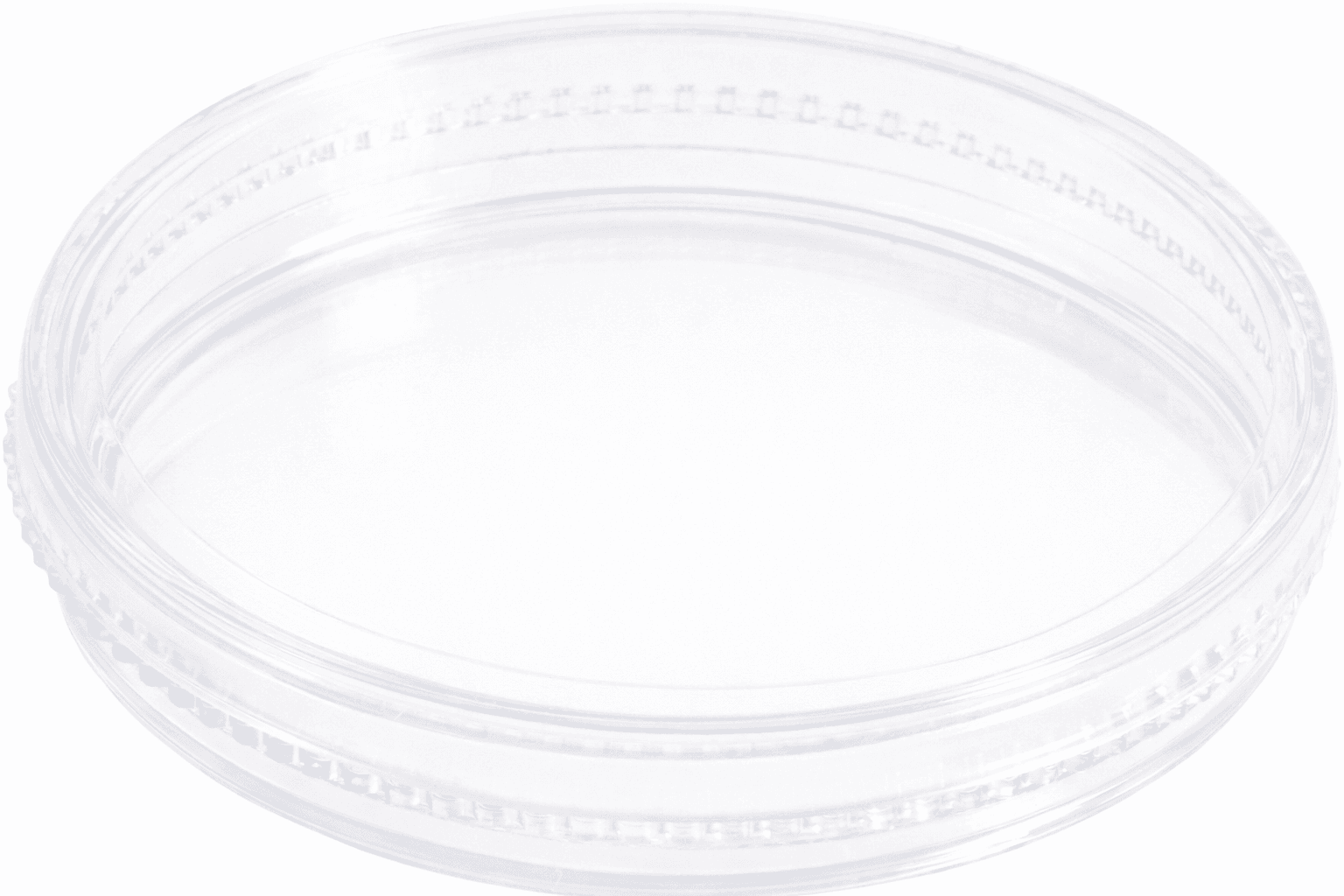
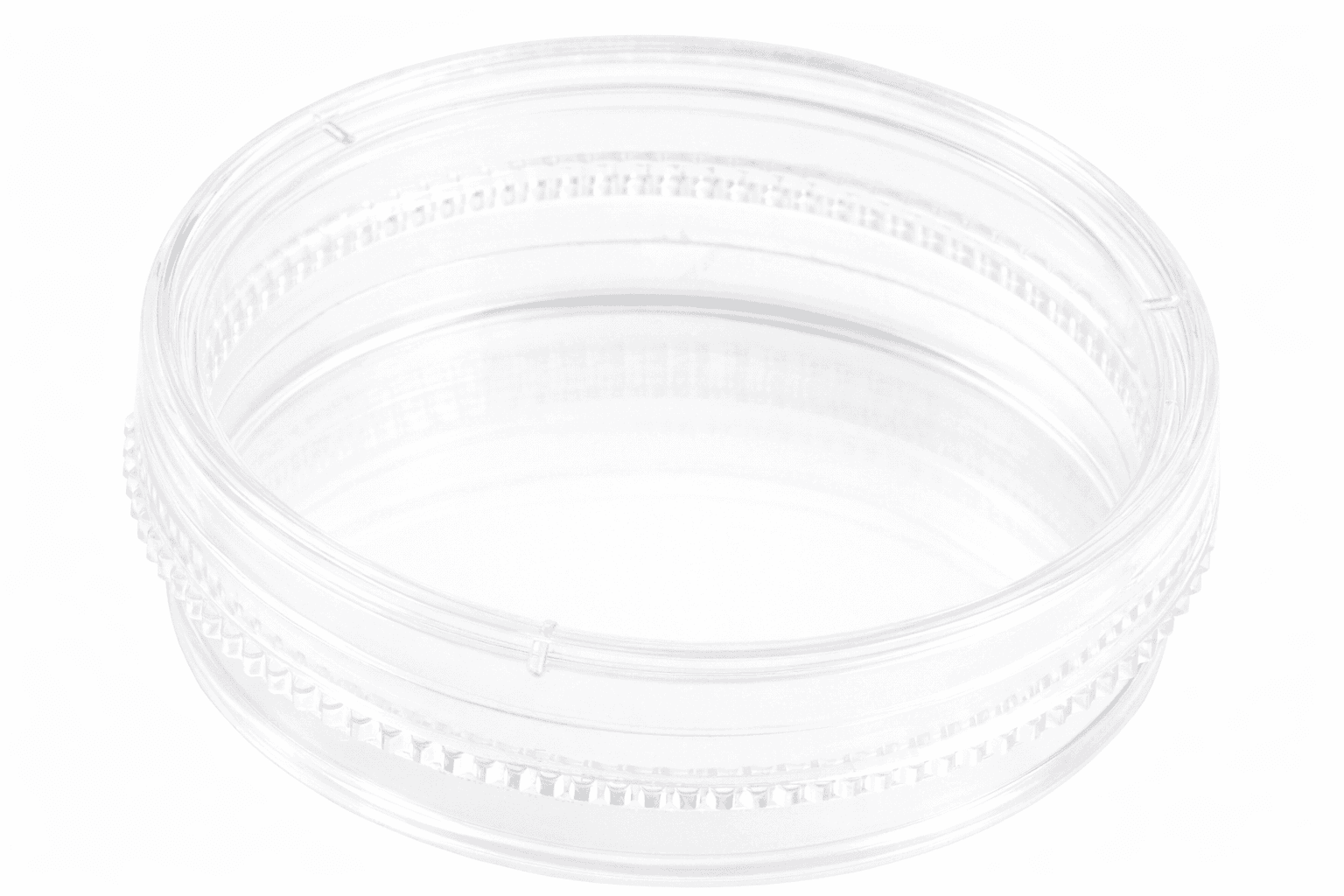
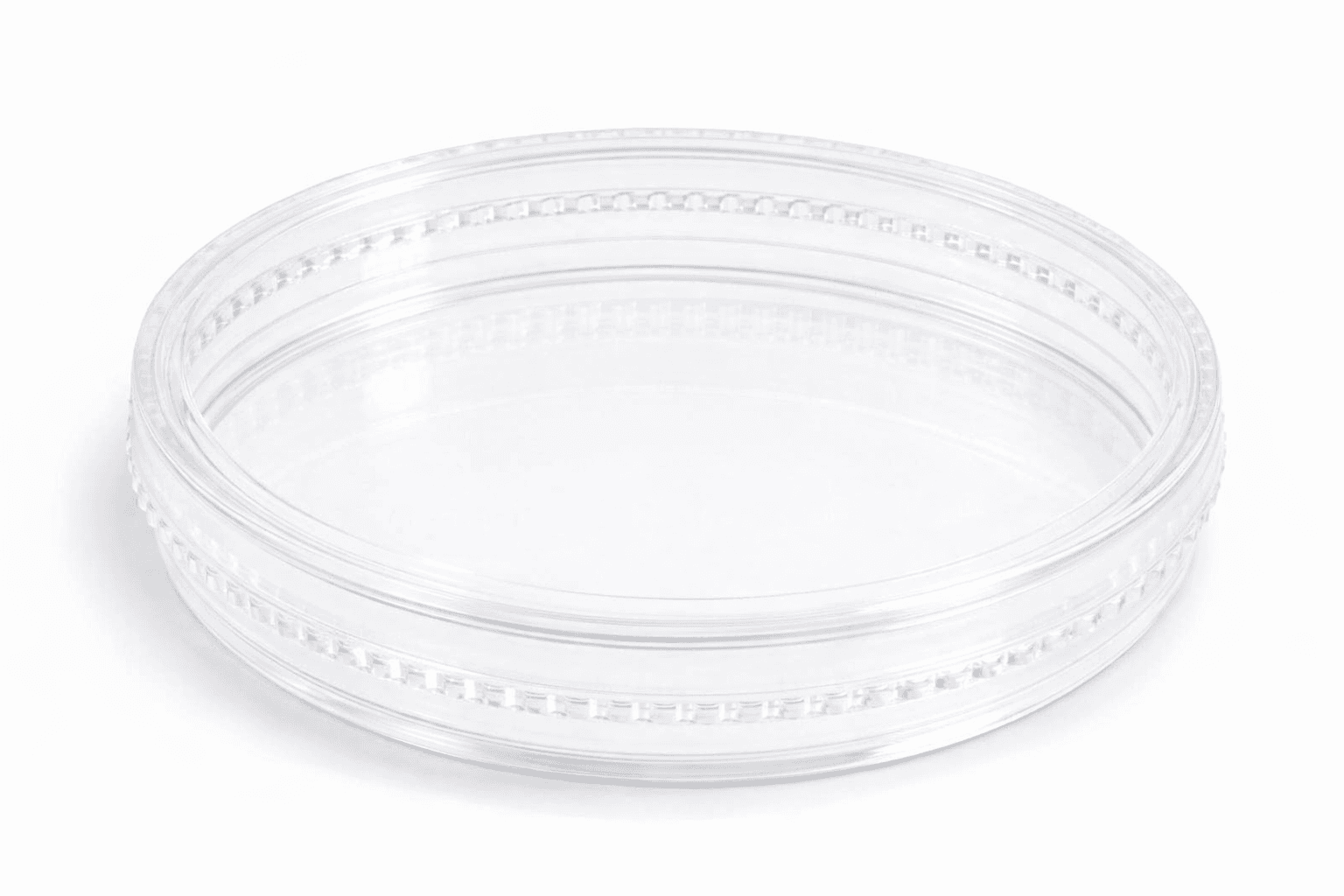
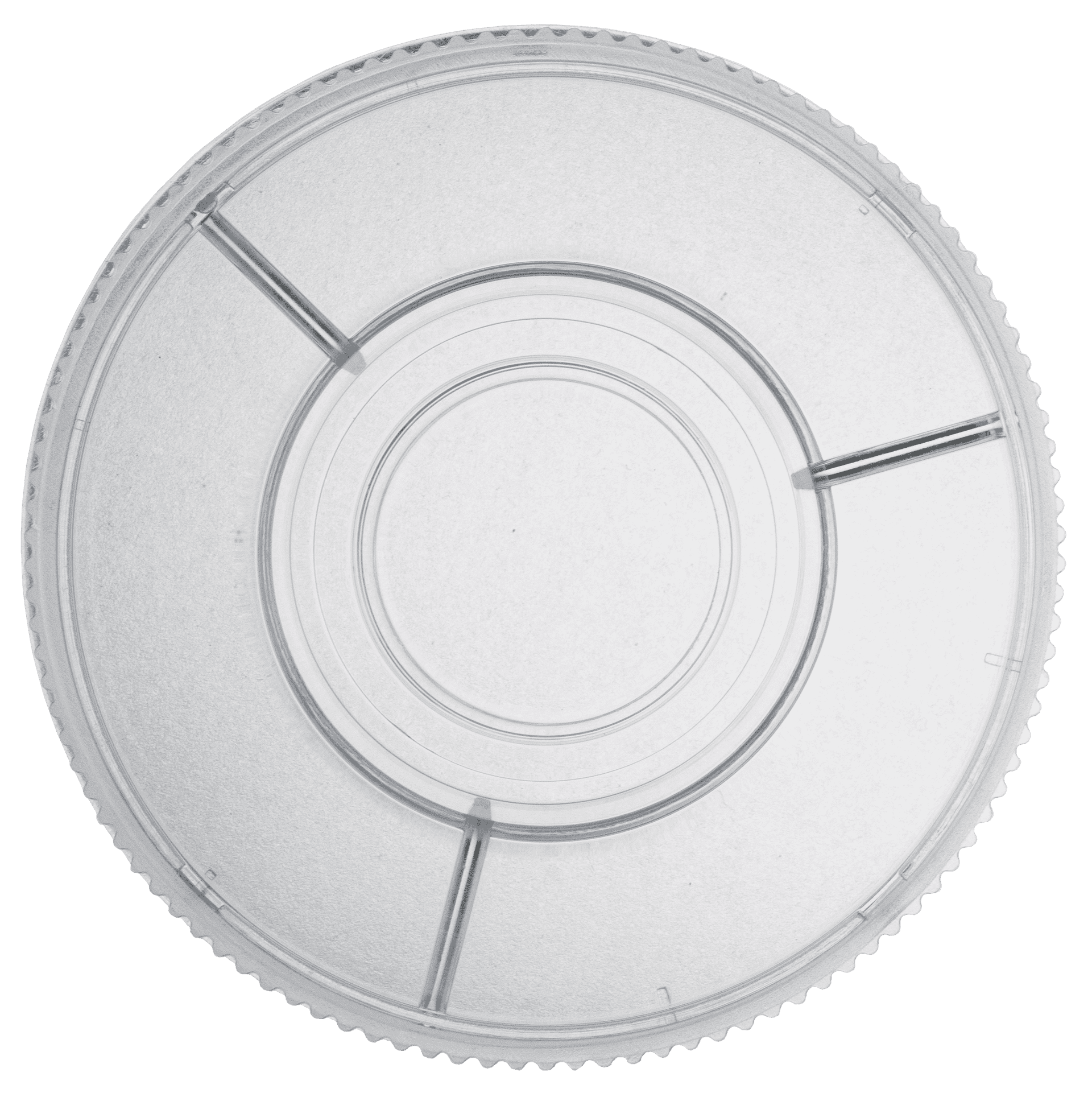
An ICSI dish is a low-profile 50 mm dish built for micromanipulation: its low wall lets the holding and injection micropipettes reach the drops at a shallow angle without touching the rim. Most IVF labs use it alongside three other dishes: a 35 mm culture dish for small-volume and single-embryo culture, a 60 mm culture dish for group culture and gamete handling, and a center well dish for insemination with built-in washing wells.
In short: use the ICSI dish for ICSI, the 60 mm dish for everyday culture and washing, the 35 mm dish when you need less volume, and the center well dish when you want washing and insemination in one dish.
See all IVF dishes · Ask for a quote: WhatsApp +91 98795 94445 or +91 96010 24737
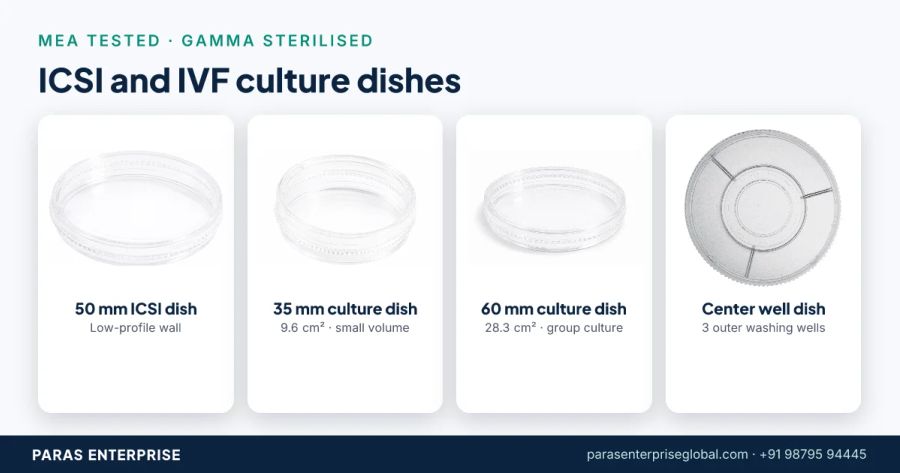
ICSI dish vs culture dish vs center well dish: comparison table
All four dishes we supply are gamma sterilised, MEA tested, have a 5-year shelf life, and come in boxes of 100 or cartons of 500. They differ in size, wall height and layout.
| 50 mm ICSI dish | 35 mm culture dish | 60 mm culture dish | Center well dish | |
|---|---|---|---|---|
| Size | 50 × 10 mm | 35 × 13 mm | 60 × 15 mm | 59 × 10 mm |
| Culture area | Open area, low-profile wall | 9.6 cm² | 28.3 cm² | Concave centre well + 3 outer wells |
| Key design point | Low wall for micropipette access | Compact, anti-slip grip ring | Large area for many drops | Washing and culture in one dish |
| Base | True flat bottom | Striation-free, optically clear | Flat, striation-free | True flat bottom |
| Light transmission | 98% | 98% | 98% | 98% |
| Main use | ICSI and other micromanipulation | Single-embryo and small-volume culture | Group culture, washing gametes | Insemination and embryo culture |
| Embryo safety | MEA tested | MEA and endotoxin tested | MEA tested | MEA tested |
| Sterility | Gamma | Gamma | Gamma | Gamma |
| Shelf life | 5 years | 5 years | 5 years | 5 years |
What is an ICSI dish?
An ICSI dish is a sterile, embryo-safe dish with a low wall and a flat, optically clear bottom, designed to sit on the stage of an inverted microscope during intracytoplasmic sperm injection (ICSI).
During ICSI the embryologist works with two micropipettes at once. The holding micropipette keeps the oocyte steady, and the ICSI injection micropipette picks up a single sperm and delivers it into the oocyte. Both enter the drop at a shallow angle. In a dish with a tall wall, the micropipettes can hit the rim before they reach the drop. The 50 mm ICSI dish (50 × 10 mm) keeps the wall low so both micropipettes have room to work.
Two other details matter on the microscope stage:
- True flat bottom. A flat, even base keeps the oocyte and sperm in focus across the whole drop.
- Grip. The dish is moved on and off a heated stage many times; a grip makes it easier to handle with gloves.
A typical ICSI dish holds small drops of medium for the oocytes and a drop for the sperm, all under oil. Drop layout follows your lab's own protocol.
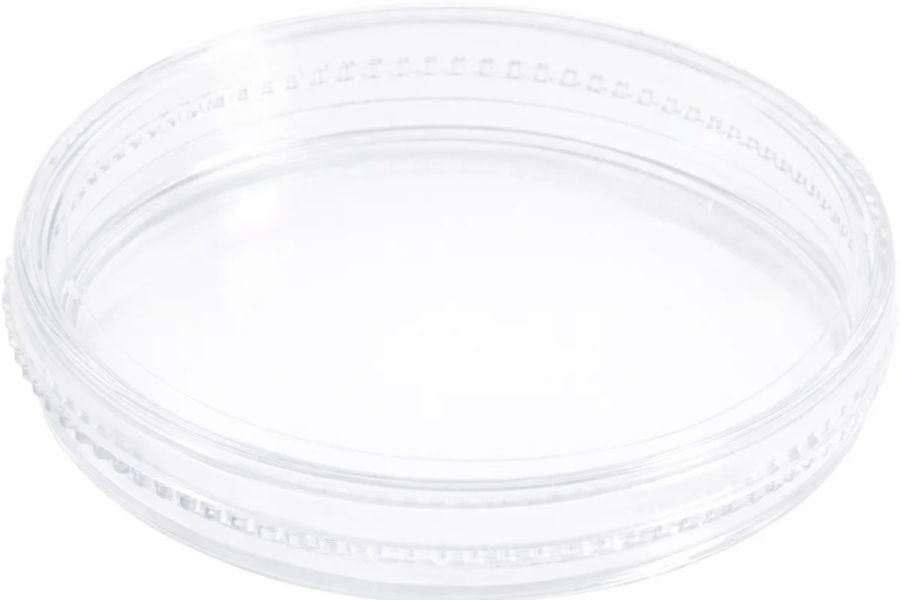
Why not use a normal culture dish for ICSI?
You can place drops in any embryo-safe dish, but a standard culture dish has a taller wall (the 60 mm culture dish is 15 mm high). That wall limits how low the micropipettes can come in, which makes it harder to hold the oocyte and line up the injection micropipette. A dedicated ICSI dish removes that problem. This is a mechanical point about access and visibility, not a claim about clinical outcomes.
35 mm culture dish: for small volumes and single embryos
The 35 mm IVF culture dish (35 × 13 mm, 9.6 cm²) is the compact option. Labs use it when they culture one embryo per dish, prepare a few droplets under oil, or rinse and hold oocytes and embryos between steps.
- Less medium and oil for each dish, because the area is smaller
- Anti-slip grip ring, so it does not slide out of gloved fingers
- Striation-free base for a clear view
- MEA and endotoxin tested
60 mm culture dish: the everyday dish
The 60 mm IVF culture dish (60 × 15 mm, 28.3 cm²) has about three times the area of the 35 mm dish. That space holds several drops of medium under oil, so it is the general-purpose dish in most IVF labs.
- Embryo culture in several drops under oil
- Washing and handling oocytes and sperm
- Preparing drops for ICSI or embryo transfer
- Grip ring for carrying it between the incubator and the workstation
Center well dish: insemination and washing in one dish
The center well dish (59 × 10 mm) divides the dish into a concave centre well for the specimen and three outer wells for washing. Oocytes or embryos are rinsed through the outer wells and then placed in the centre well for insemination or culture, without moving them to a second dish.
It also has a true flat bottom, an air vent for gas exchange and a grip for handling.
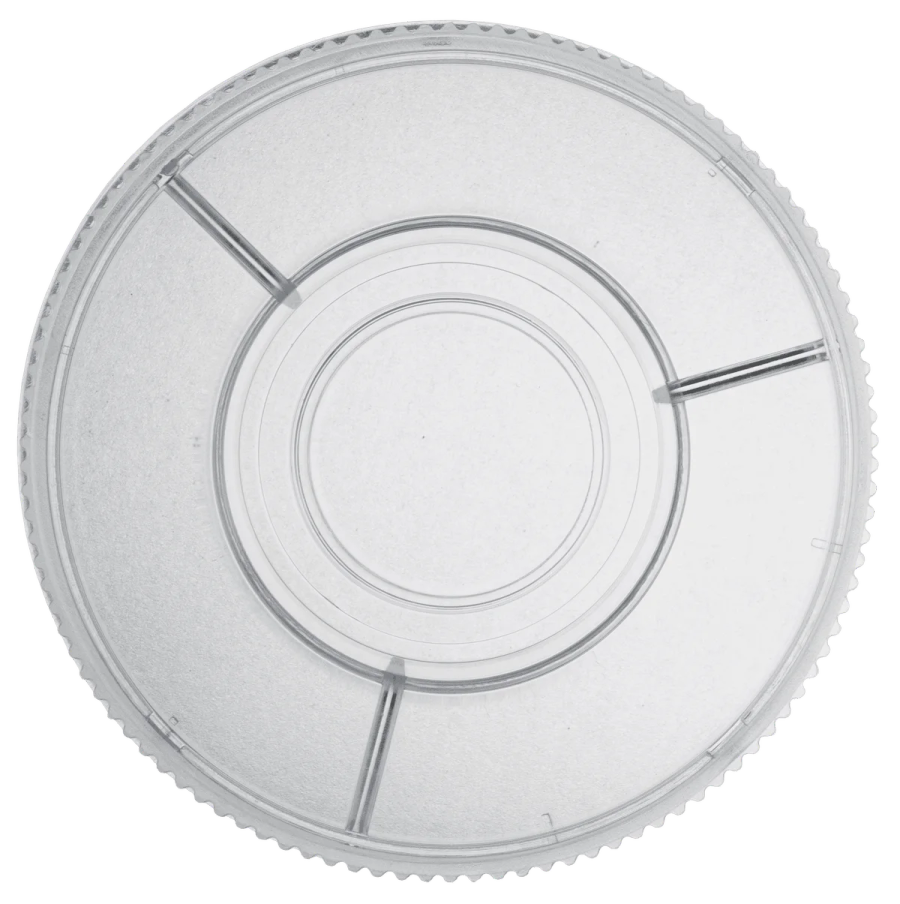
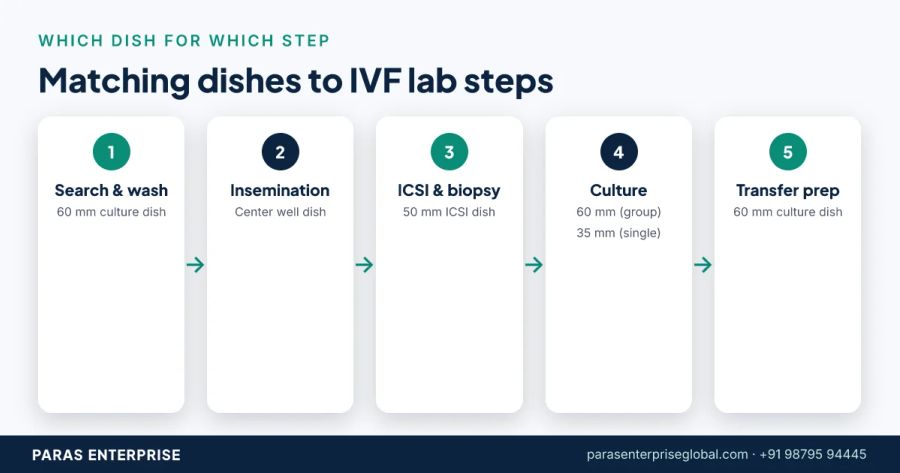
Which dish should your lab use for each step?
The table below shows how labs commonly match dishes to steps. Your own protocol and the embryologist decide the final set-up.
| Lab step | Dish to use | Why |
|---|---|---|
| Oocyte search and washing | 60 mm culture dish | Large area for several wash drops |
| Insemination (conventional IVF) | Center well dish | Wash in outer wells, inseminate in centre well |
| ICSI | 50 mm ICSI dish | Low wall gives micropipette access |
| Embryo biopsy | 50 mm ICSI dish | Same micromanipulation set-up as ICSI |
| Group embryo culture | 60 mm culture dish | Room for several culture drops |
| Single-embryo or small-volume culture | 35 mm culture dish | Less medium and oil per dish |
| Preparing for embryo transfer | 60 mm culture dish | Space to prepare and hold drops |
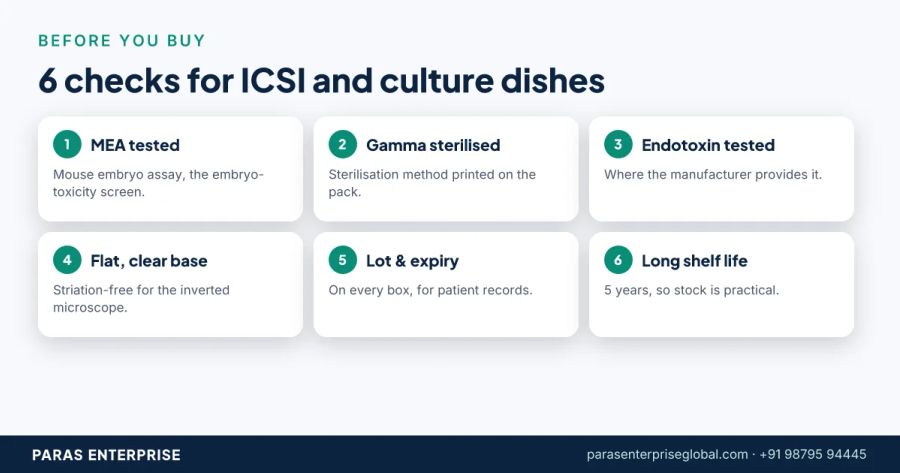
What to check before you buy ICSI and culture dishes
Dishes touch gametes and embryos directly, so check these points with any supplier:
- MEA test. Ask whether the dish is mouse embryo assay tested, the standard embryo-toxicity screen for IVF consumables.
- Sterilisation method. Gamma sterilisation should be stated on the pack.
- Endotoxin testing, where the manufacturer provides it.
- Optical quality. A flat, striation-free base matters on the inverted microscope; all four of our dishes have 98% light transmission.
- Lot number and expiry on every box, so you can record which lot was used for each patient.
- Shelf life. A long shelf life (5 years on our dishes) makes it practical to keep stock.
- Wall height and grip. These matter for ICSI and for everyday handling.
ICSI dishes and IVF culture dishes from Paras Enterprise
We supply all four dishes to IVF clinics and embryology labs across India, from our office in Ahmedabad, Gujarat:
Orders are usually dispatched within 48 working hours, we also ship outside India, and bulk discounts are available. For the full ICSI set-up, see our guide to the consumables used in ICSI, step by step.
Get a quote for ICSI and culture dishes
Tell us which dishes you use, your monthly quantity and your delivery city, and we will reply with a quotation.

- WhatsApp / Call: +91 98795 94445 · +91 96010 24737
- Email: admin@parasenterpriseglobal.com
- Office: 117, Medicine Market, near Paldi Cross Road, opp. Shefali Centre, Paldi, Ahmedabad, Gujarat 380006
- Hours: Monday to Saturday, 9:30 AM to 7:30 PM IST